
Agentic engineering of business processes
We redesign a business process so that several agents run it together as a self-learning liquid workflow. On top of that we build the human-in-the-loop interfaces and flows through which your people stay in charge.
 Gen‑Z: this way!
- MCP
- Agent Skills
- Microsoft Azure
- Amazon Web Services
- EU
One offering, two layers
Human-in-the-loop user interfaces and flows
The interfaces and flows through which your people steer the agent: approvals, structured edits and live views of what it is doing. They work because the process underneath was engineered for an agent.
Agentic engineering of business processes
We take one business process and rebuild it for an agent: connections to your data through MCP, your experts' process knowledge as skills, and a check after every step.
That is all we do. Every other page of this site shows how and why.
AI bolted onto an existing workflow is not a good idea
A workflow built for people handing work to each other keeps its waiting times, handovers and blind spots when an AI step is attached to it. The better question is how the process would look if it were designed today, with an agent doing the work and people making the decisions.
Bolted on
- The old process stays, with one more step
- The model guesses at knowledge nobody wrote down
- People check everything again by hand
Engineered
- The process is redesigned around the agent
- Expert knowledge is captured as skills
- People decide at defined points
Watch the agent work
Pick a workflow and start it. One check fails on purpose, one step waits for you, and at the end the agent learns from your decision.
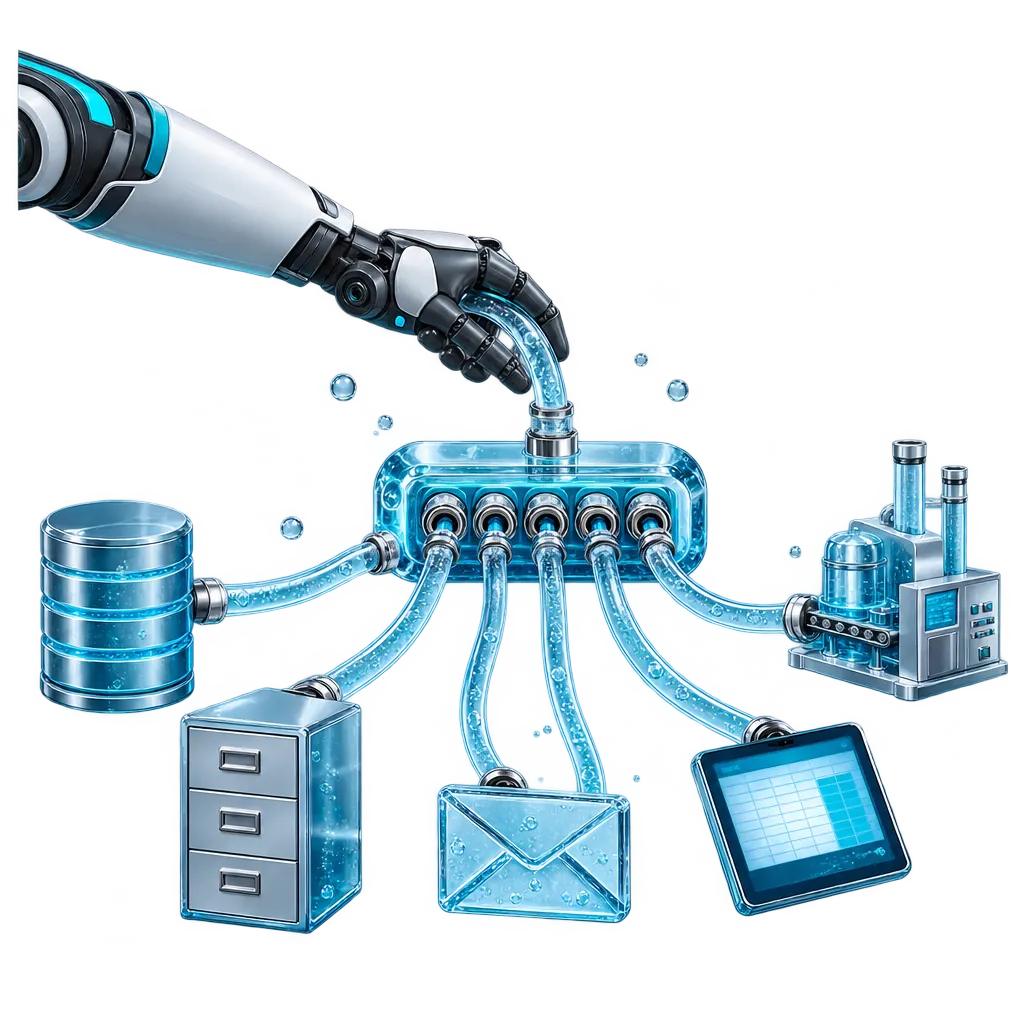
Connections: every data source through MCP
The Model Context Protocol gives the agent one standard socket for every system. A connection is set up once per tool group, with its own credentials and permissions. All MCP servers sit behind an MCP Security Proxy: the agent reaches no data source directly.
Reads prices, stock and orders.
The call goes through the MCP Security Proxy.
Skills: your experts' process knowledge
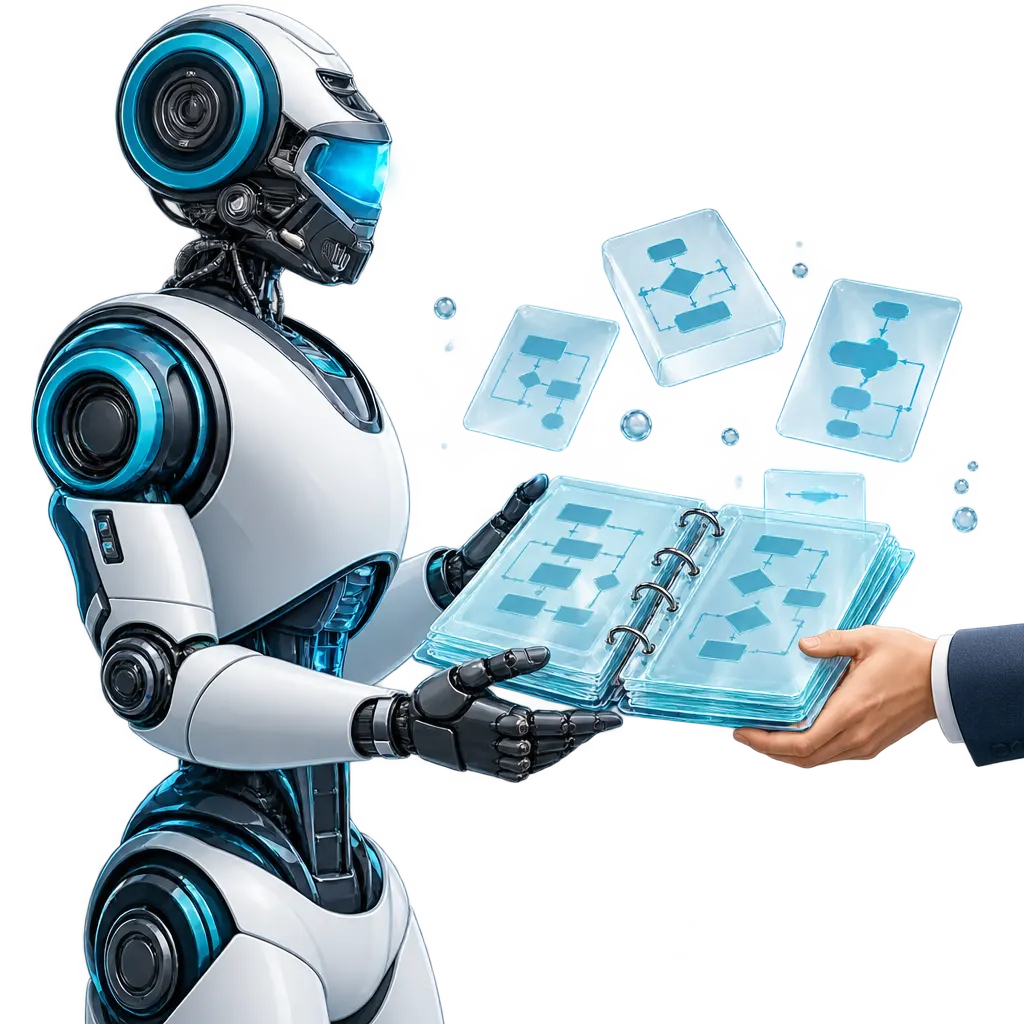
A skill is a folder: instructions written by the business expert and code written by an engineer. The agent loads it when a step calls for it, and follows it.
# Pricing

## When to use
A customer asks for a quote with more than
one line item.

## Steps
1. Read list price and stock from the ERP.
2. Run check_margin.py for every line.
3. Below minimum margin: look up the current
   purchase price in the supplier database.
4. Never send a quote. Hand the draft to sales.- Reviewed by a second person before release
- Kept in your company's skills store
- Portable across model providers
Checks: no step without proof
Between the connections sit the checks. The agent only moves on when a check passes, and it goes back when one fails.
Rules
Deterministic program code your engineers signed off.
Data
Is the answer from the source complete and in the expected form?
Budget
Does the run stay within its token and cost limit?
Approval
Decisions with consequences wait for a person.

Ontology: the agent's model of your business
An ontology is a knowledge graph of the objects that matter in your company and how they are linked. A question such as “which customers are affected if this supplier is late?” becomes a walk along the links instead of a guess.
Supplier
Who delivers what, with which lead time and quality rating.
Part → Machine → Production order → Customer
When experts leave, their knowledge stays
Agents are the way to conserve what an expert knows before they retire or move on. The agent can train the successors and, where needed, stand in. That only works with an ontology as its memory, developed and verified together with the expert beforehand: knowledge extraction.
Extract
The agent interviews the expert along real cases and drafts the ontology: objects, rules and the reasons behind decisions.
Harness engineering: everything around the model
The model is rented and the agent loop comes with an SDK. What makes it a system your business can run is the harness around both, and that is what we engineer for your process.
Skills
Process knowledge the agent loads for a step.
Where agents earn their keep
Five agents, one factory
ManufacturingQuality on the production line
Engineering and researchEngineering decisions over months
Energy infrastructureFrom requirements to a binding specification
Shipping and long-lived assetsProjection versus reality
Systems engineeringRequirements that argue back
Knowledge transferOnboarding that stays current
Industrial distributionQuotes without the manual lookup
Open source at the core, run in your cloud
Our systems run on Etienne, our MIT-licensed agent harness. You get the source, the skills and the knowledge your experts taught it, deployed to your Azure or AWS account.


Who builds it
Ralph Navasardyan began commercial software development at the age of 15 and has spent over 20 years helping international enterprises implement innovation projects using AI, cloud, and web technologies.
About Ralph